
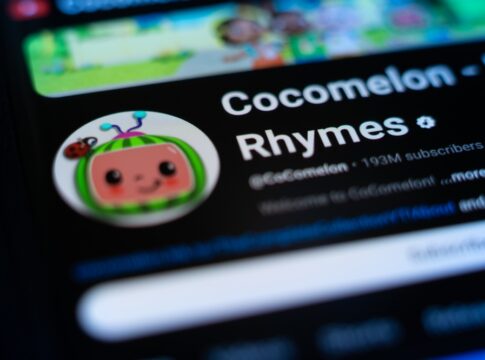
A kids’ show accused of being “crack for toddlers” is now waving a UCLA partnership like a shield, while worried parents still do not have real proof their children’s brains are safe.
Story Snapshot
- CoComelon’s parent company Moonbug is partnering with UCLA’s Center for Scholars and Storytellers to claim its videos are guided by child-development research.
- Critics say CoComelon was built to glue toddlers to screens with rapid cuts, bright colors, and nonstop music long before UCLA got involved.
- There is still no direct, peer-reviewed research proving CoComelon is either safe or harmful for toddler development.
- Parents are left to navigate Big Tech’s kid-content machine with limited facts and a lot of marketing spin.
CoComelon Under Fire and the UCLA “Seal of Approval”
For years, parents have shared stories of toddlers melting down when CoComelon gets turned off and zoning out in front of screens for long stretches of time. Public pressure spiked as critics compared the show’s fast pace and bright colors to a kind of “digital drug” for very young children. In response, Moonbug Entertainment, which owns CoComelon, announced a high-profile partnership with the University of California, Los Angeles Center for Scholars and Storytellers, saying it would bring child-development research into its preschool programming and creative process.[3][4][6]
Moonbug’s press materials say the University of California, Los Angeles experts will help define learning goals, shape themes, and review scripts for flagship series like CoComelon, Blippi, and Little Angel.[3][4] Coverage of the deal stresses that academic expertise will now sit inside the content pipeline, sounding reassuring to parents who worry about mindless screen time.[2][5][6] But these are process promises, not outcome proof. There is still no independent, published research showing that this new partnership has actually changed how episodes affect children.
The “Engineered Attention” Problem Parents Cannot Ignore
Long before the University of California, Los Angeles partnership, reporting and commentary described Moonbug’s data-driven “master blueprint” for keeping toddlers locked onto the screen. A documentary-style analysis, “The Cocomelon Effect,” claims Moonbug tested tiny children in London labs, tracking their eye gaze to see which edits, colors, and character designs held attention best. According to that transcript, the team pushed for cuts every one to three seconds, hyper-bright colors, oversized heads, and nonstop music to trigger the brain’s orienting reflex over and over.
Critics in that video argue this formula puts kids in a hyper-aroused state that makes it very hard to look away and then leaves them cranky when the stimulation stops. That concern fits with older research on fast-paced, highly stimulating content, including a 2011 University of Virginia study where preschoolers who watched just nine minutes of a quick-cut cartoon performed worse right afterward on tasks that needed focus and self-control than kids who watched slower content or drew pictures.[1] That study was not about CoComelon itself, but it shows why parents worry about shows built on constant sensory hits.
What the Research Really Says – and Does Not Say – About CoComelon
Here is the hard truth: there is still no direct, peer-reviewed study testing CoComelon’s exact pacing and style against toddler brain development over time.[3] The American Academy of Pediatrics notes that child-development experts criticize CoComelon for its very fast pace, attention-grabbing tricks, and lower educational value compared with calmer shows like Daniel Tiger’s Neighborhood or Ms. Rachel.[3] Yet the group also admits that no study has proved CoComelon itself causes harm or help; the concern is based on general research about hyper-stimulating media and screen time.[3][1]
Some media researchers push back on the panic and say claims that “one show will destroy your kid’s brain” are exaggerated. A parenting analyst notes that there is zero direct evidence that CoComelon alone damages children and that several language studies even suggest YouTube-style content can support English vocabulary learning.[4] Follow-up work on fast versus slow shows has also raised questions about how big those short-term executive function effects really are.[4] What everyone does agree on is that toddlers learn best from real-world interaction, play, and conversation, not from passive screen time.[1][3]
How Big Media Uses Universities to Calm Parents
Moonbug’s move to bring in the University of California, Los Angeles fits a now familiar pattern in kids’ media. When companies face criticism that their content is too shallow or too stimulating, they respond by highlighting ties to academic centers, “learning frameworks,” and research-backed labels.[3][2] The announcement of this partnership came as CoComelon faced international scrutiny for overstimulation concerns,[2] making the timing look more like a public-relations strategy than a quiet, long-term research effort. That does not mean the research is fake, but it does mean parents should read the claims with clear eyes.
Reports say the University of California, Los Angeles Center for Scholars and Storytellers interviewed more than ten Moonbug staff, including creative leaders for CoComelon and related shows, then offered recommendations on pacing and content. Some coverage says Moonbug plans to add slower visual transitions and natural pauses to new episodes in response to criticism. Yet no one has published a detailed “before and after” analysis of cut frequency, silence, or the length of calm scenes to show that the changes are real and meaningful in practice. Right now, families are being asked to trust press releases instead of hard data.
What This Means for Conservative Parents Who Are Tired of Being Played
For many conservative parents, this fight is about more than one cartoon. It touches a bigger frustration with large media and tech companies that claim to care about children while building products to keep eyes glued to screens. CoComelon’s rise depended on autoplay algorithms, search tricks, and design choices that targeted exhausted moms and dads who just needed a quiet moment. Now, when those parents question the cost, the answer is “trust the experts” from a university that also gains money and prestige from the deal.
There is no clear evidence that CoComelon will ruin a child, but there is also no proof that it is truly “developmentally optimized” just because a university logo is attached.[3][4] Until independent researchers test the actual episodes and publish results, parents remain the last line of defense. That means limiting total screen time, swapping in slower, more thoughtful shows, and keeping plenty of real-life play, reading, and family time at the center of early childhood.[1][3] In a media world driven by clicks and data, guarding your child’s attention is now a key part of guarding your family’s values.
Sources:
[1] Web – Under fire from parents, ‘CoComelon’ turns to UCLA to prove its videos …
[2] Web – The Science Behind CoComelon’s Music-First Approach, and What …
[3] Web – Moonbug’s UCLA partnership will bring more “child development …
[4] Web – CoComelon studio Moonbug partners with the Center for Scholars …
[5] Web – Moonbug partners with UCLA’s CSS to integrate child development …
[6] Web – ‘Cocomelon’ Studio Moonbug to Begin Applying Child Development …