
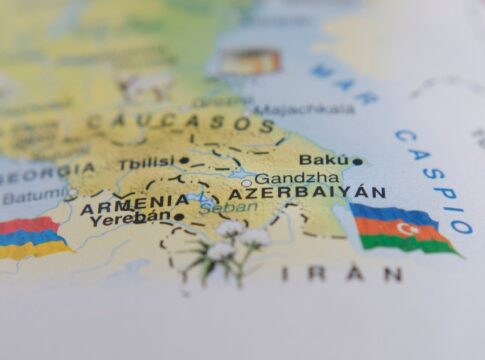
Israel’s decision to recognize the Armenian Genocide has unleashed a fierce backlash from Azerbaijan that exposes how deeply history is weaponized in today’s global politics.
Story Snapshot
- Israel’s government votes to recognize the Armenian Genocide, breaking decades of political hesitation.
- Azerbaijan, a close ally of Turkey, condemns the move as “distortion of historical facts” and urges a reversal.
- Most of the world’s historians and many nations say the 1915 mass killings of Armenians were genocide.
- The fight over this history shows how regimes twist facts when recognition would carry legal and moral costs.
Israel Moves Toward Formal Recognition Of The Armenian Genocide
Israel’s Cabinet unanimously approved a proposal on June 28, 2026, to formally recognize the mass killings of Armenians by the Ottoman Empire as genocide, sending the measure to the Knesset for final approval.[2] The bill states that the genocide began on April 24, 1915, when Ottoman authorities arrested and deported Armenian leaders in Constantinople, and it cites a death toll of about 1.5 million Armenians, alongside the destruction of ancient Armenian culture and heritage.[2] Foreign Minister Gideon Sa’ar described recognition as both a moral duty and a Jewish responsibility to oppose denial.[3]
This recognition marks a major shift after years of Israeli caution tied to relations with Turkey, which has long fought against any use of the word “genocide” for the 1915 events.[3] Outside Turkey and Azerbaijan, the broad historical consensus is that the Ottoman Empire’s campaign of mass deportations, death marches, and killings of Armenians during World War I fits the legal definition of genocide.[9] By backing the resolution, Israel positions itself to become roughly the thirty-fifth country to recognize the Armenian Genocide, joining the United States and many European nations that have already done so.[3][13]
Azerbaijan Condemns Israel And Echoes Turkish Denial
The government of Azerbaijan quickly condemned Israel’s decision, calling it a “matter of serious concern” and demanding that Jerusalem reconsider.[8] In a statement, Azerbaijan’s Foreign Ministry claimed that Israel’s move “distorts historical facts” and turns “complex historical processes into a political decision without legal and scientific basis,” language that closely mirrors long-standing Turkish talking points.[3][5] Azerbaijan insists that the 1915 events should not be labeled genocide, aligning itself with Turkey and Pakistan as the only governments that openly deny the Armenian Genocide despite decades of research and survivor testimony.[9][13]
Azerbaijan’s reaction also reflects regional power politics. Reports describe Baku framing Israel’s recognition as a step that undermines its alliance with Turkey and deepens regional divisions.[11] Instead of engaging the specific evidence cited by Israel—such as the April 24 start date, the mass arrests, and the claimed 1.5 million death toll—Azerbaijan offers a broad dismissal and no detailed counter-record of Ottoman orders or demographic data.[2][3] This approach risks looking more like political loyalty to Ankara than independent historical analysis, especially since the vast majority of non-Turkish scholars accept the genocide as fact.[7][9]
History, Law, And Why Some Governments Fear The Word “Genocide”
The fight over Israel’s resolution shows why so many governments resist acknowledging genocides until many decades later. Under the Convention on the Prevention and Punishment of the Crime of Genocide, states that recognize a genocide carry duties to prevent and punish such crimes in the future, not only at home but anywhere they see serious risk.[18][12] Legal scholars explain that naming an atrocity “genocide” can trigger calls for sanctions, criminal trials, and stronger action by courts and international bodies, which many governments want to avoid.[12] As a result, formal recognition is rare and usually happens only when political costs seem manageable.[12]
Genocide debates also interact with ongoing conflicts. Israel now faces accusations at the International Court of Justice over its war in Gaza, where some states claim genocide while others dispute that legal label.[4][16] At the same time, Turkey and Azerbaijan promote narratives that flip the script, accusing Armenians of committing a “real genocide” against Azeris, again without matching the level of documented evidence historians have gathered for the 1915 crimes.[7] For readers who value truth, limited government, and clear moral standards, this episode is a reminder that authoritarian and semi-authoritarian regimes often twist history to dodge responsibility, while free nations are under pressure to stand up for facts, even when it ruffles allies.
Sources:
[2] Web – Israel’s cabinet has unanimously approved a proposal to … – Facebook
[3] Web – Israel’s Cabinet Unanimously Recognizes The 1915 Armenian …
[4] Web – Sa’ar to advance resolution recognizing Armenian Genocide – JNS.org
[7] YouTube – Q&A: Israel continues to commit genocide by deliberately …
[8] Web – Israeli Government Unanimously Approves Proposal To Officially …
[9] Web – Azerbaijan condemns Israel’s recognition of the Armenian genocide
[11] Web – Will Israel follow US Congress in Recognizing the Armenian …
[12] Web – Azerbaijan slams ally Israel’s recognition of Armenian genocide
[13] Web – The Ramifications Of Recognition Of Genocide
[16] Web – In the Shadow of Genocide: Ethnocide, Ethnic Cleansing, and …
[18] YouTube – 75 years on: The Genocide Convention in International Courts