
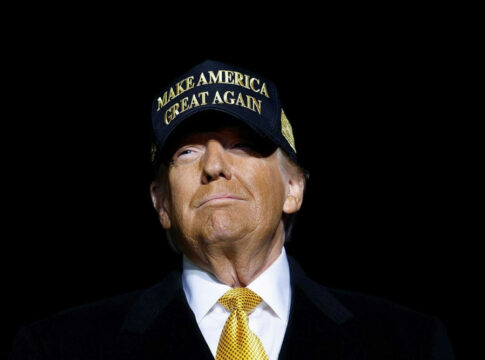
A media elite who cheered Obama’s Iran cash is now calling Trump’s tougher, leverage-based Iran deal a “bribe” and “abject surrender” — even after U.S. strikes killed terror leaders and crushed key parts of Tehran’s war machine.
Story Snapshot
- Joe Scarborough slams Trump’s 14‑point Iran Memorandum of Understanding as a “bribe” and “abject surrender,” warning the regime will grow stronger.
- The deal ends open fighting, reopens the Strait of Hormuz, and ties sanctions relief to Iran’s behavior and a later final agreement.[2][4]
- Scarborough himself admits U.S. action degraded Iran’s military and removed top leaders, but now claims money will undo those gains.[6][1]
- Critics on the left call the MOU a historic failure, while hawks see it as an interim ceasefire that keeps leverage for a better final deal.[6][17]
Scarborough’s ‘bribe’ attack on Trump’s Iran framework
Morning Joe host Joe Scarborough used his show to blast the Trump administration’s new peace framework with Iran, mocking it as a “bribe” that will never change the hard‑line regime.[3] He argued that Iran’s rulers do not “want wealth” or an open society, but instead want cash to build what he called a “terror state” at home and abroad.[3] His comments came as Vice President JD Vance described the talks as a “major milestone,” pointing to Iran’s reported agreement to allow United Nations weapons inspectors into the country.[3]
Scarborough’s latest warning follows days of harsh coverage on his network of the 14‑point Memorandum of Understanding between the United States and Iran.[2] The agreement ends active military operations, reopens the vital Strait of Hormuz, and creates a large reconstruction package for Iran, funded mainly by other countries, not American taxpayers.[1] Scarborough calls that package “reparations” and claims it will leave Iran “more powerful than they’ve ever been,” insisting Tehran’s leaders see the deal as a victory.[2]
What the 14‑point Iran MOU really does — and what it does not
The text of the 14‑point MOU released by the administration and reported by outlets like CNN and CBS shows an interim ceasefire framework, not a final, binding peace treaty.[4][5] The document declares an “immediate and permanent cessation of military actions” on all fronts, including Lebanon, but clearly states that a “final agreement” will be negotiated within 60 days and can be extended by both sides.[4][5] During that period, Iran keeps its nuclear program in place while the United States agrees not to add new sanctions or send more forces, freezing the status quo while talks continue.[4][17]
On nuclear issues, Iran again promises it will not “develop or procure nuclear weapons,” echoing language from past deals but leaving key enforcement and inspection details for later discussions.[4][6] The framework says both sides will work out how to handle Iran’s enriched uranium stockpile in a final agreement, including options like dilution under international monitoring.[1][17] The MOU also calls for lifting American and United Nations sanctions on a schedule tied to that future deal and links large‑scale economic relief to Iran’s compliance.[4][5] Critics note that the text does not address Iran’s ballistic missiles or its terror proxy network, leaving those threats untouched.[6][17]
Media outrage, left‑wing criticism, and the question of leverage
Left‑leaning policy shops and commentators, far from praising Trump, are attacking the MOU as proof that the Iran war “was a failure of historic proportions.”[15] Analysts at Chatham House and other think tanks say the framework mainly reduces immediate risk and gestures toward a future United Nations Security Council resolution, but does not yet resolve core disputes over enrichment, verification, or regional terror activity.[16][17] A detailed legal analysis on Lawfare calls the MOU a ceasefire that “will end the U.S.-Iran conflict without ending the war,” stressing that many hard issues are pushed into later talks.[17] That picture undercuts the idea that Trump simply surrendered; instead, it shows an unfinished process that could still go in very different directions, depending on how the White House uses its leverage.[6][17]
At the same time, some hawkish voices argue the deal can be used to squeeze Iran further, not reward it.[6][19] They point out that sanctions relief is not automatic and is tied to implementation and a final nuclear agreement, meaning Iran must perform if it wants lasting economic gains.[2][5] The MOU also contains an “executive mechanism” to monitor compliance and paves the way for a binding United Nations resolution on a final deal.[4][16] Supporters say that structure gives Washington tools to snap pressure back if Tehran cheats, while critics counter that without firm limits on missiles and proxies, Iran can pocket the pause in fighting and rebuild its dangerous networks.[6][16]
Scarborough’s shifting line: from backing strikes to blasting a deal
Scarborough’s anger is sharpened by his own on‑air history. Earlier in the conflict, he strongly defended Trump’s decision to strike Iran’s nuclear and military sites, saying “the answer’s yes, it’s good” that the regime’s military capability was “degraded radically.”[6] He clashed with Senate Democratic Leader Chuck Schumer over that point, insisting that killing top leaders and wrecking parts of Iran’s war machine was a win for American security and for allies in the region.[4][6] He even stressed that many Americans shared that view, backing the strikes as a way to stop Iran’s push toward a nuclear weapon.[4]
Now, Scarborough warns that economic relief under the MOU could wipe out those gains, making Iran “more powerful than they’ve ever been” once oil money and unfrozen funds flow again.[2] That fear lines up with decades of experience: past cash flows often went to terror groups, not ordinary families. But the actual MOU does not hand Tehran a blank check on day one. Sanctions end in phases and are linked to a later, tougher agreement that has not yet been written.[2][4][5] The real test will be whether the Trump administration uses this pause to lock in strict inspections and real limits, or whether the permanent issues get kicked down the road yet again — something conservatives who value strength, security, and fiscal sanity will be watching very closely.
Sources:
[1] Web – YouGov Poll: 78% of Americans Want Iran War Ended Now
[2] Web – What’s in the deal between the US and Iran? – BBC
[3] Web – What’s in the Iran deal Trump says he’s ready to sign – Axios
[4] Web – Trump and Iran’s president sign initial deal to end war, open Strait …
[5] Web – US releases official agreement with Iran. Read the 14-point text | CNN
[6] Web – Read the 14 points of the agreement between Iran and the U.S.
[15] YouTube – The MOU Ignites a Firestorm
[16] Web – STATEMENT: Iran MOU Confirms Iran War Was Failure of Historic …
[17] Web – The US–Iran memorandum of understanding nods to international …
[19] Web – [PDF] June 17, 2026 The Honorable Marco Rubio Secretary of State U.S. …