
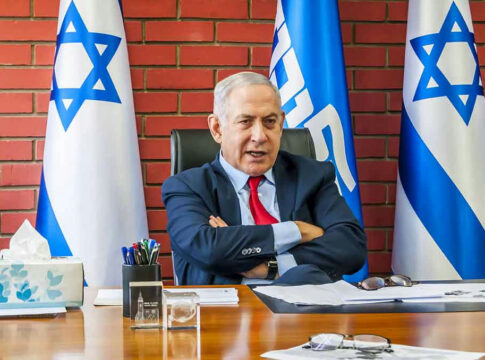
Israel’s parliament has officially dissolved itself, setting the stage for national elections in 102 days as Prime Minister Benjamin Netanyahu faces a fractured coalition, a mounting legal battle, and a country still at war.
Story Snapshot
- The 25th Knesset voted to dissolve itself, triggering elections roughly 102 days away.
- Former Prime Ministers Naftali Bennett and Yair Lapid have joined forces to challenge Netanyahu at the polls.
- Netanyahu dissolved his six-member war cabinet after centrist partners departed, shifting war decisions to a larger, hard-liner-dominated security cabinet.
- Israel’s wartime costs are estimated at $135 billion, though the Bank of Israel says the economy remains resilient.
Israel’s Parliament Votes to Dissolve
Israel’s 25th Knesset passed its own dissolution bill in its second and third readings, officially ending the current parliament. Elections are now set for roughly 102 days from the vote. The move comes as Netanyahu’s governing coalition has struggled to hold together under the weight of a prolonged multi-front war, domestic political pressure from both the left and the far right, and growing international scrutiny of his leadership.
Netanyahu has publicly declared Israel’s military campaigns a success. He says Israel is “stronger than ever” after operations in Gaza, Lebanon, Syria, and Iran. He also ordered troops to respond immediately to any threat while visiting the front alongside Defense Minister Israel Katz. But critics argue the wars have dragged on far longer than necessary, and a New York Times investigation alleged Netanyahu was driven at times by personal political survival rather than national interest.
Bennett and Lapid Team Up to Oust Netanyahu
The biggest political development heading into the election is the alliance between former Prime Minister Naftali Bennett, a right-wing figure, and former Prime Minister Yair Lapid, a centrist. The two previously worked together to end Netanyahu’s 12-year run in 2021. They announced their renewed partnership with the stated goal of replacing Netanyahu’s government. Bennett has called Netanyahu “divisive” and accused him of “tearing the State of Israel apart.”
Bennett supports the war with Iran, calling it “justified,” but insists success must be measured by real strategic outcomes — not political declarations of victory. Polling shows Bennett is seen by many Israelis as more trustworthy and better suited to address social divisions and the cost of living. Netanyahu still holds an edge on national security in surveys, but that gap has narrowed. The race is shaping up as a genuine contest rather than a coronation for either side.
War Cabinet Gone, Hard-Liners Now in Charge
Netanyahu dissolved his six-member war cabinet after centrist Benny Gantz and his ally Gadi Eisenkot walked out. Rather than bring in new members, Netanyahu shifted all wartime decisions to the larger, 14-member security cabinet, which is dominated by far-right figures. Analysts warn this move reduces the chances of a ceasefire and hands more influence to hard-liners who have pushed for more aggressive action in Gaza.
The estimated cost of Israel’s wars since October 2023 has reached $135 billion. Despite that, the Bank of Israel’s governor says the economy is holding up, with financial risk returning to pre-war levels. A US-mediated framework agreement between Israel and Lebanon links any Israeli withdrawal to Hezbollah disarmament — a deal that could shape the next government’s foreign policy agenda. Meanwhile, US intelligence has reportedly warned the Trump administration that Netanyahu could undermine a potential Iran peace deal.
What This Means for Israel’s Future
Israel now enters a roughly three-month campaign period while fighting continues on multiple fronts. The International Criminal Court issued an arrest warrant for Netanyahu, placing him alongside figures like Vladimir Putin — a fact his opponents are certain to use against him. Whether voters reward his claimed military gains or punish him for the war’s cost and duration will define the next chapter of Israeli leadership. The outcome will also shape how Israel coordinates with the Trump administration on Iran and regional security going forward.
The 25th Knesset has officially dissolved.
Elections in Israel are in 102 days. 🇮🇱 pic.twitter.com/NNYkpHkEOQ
— Eli Afriat 🇮🇱 (@EliAfriatISR) July 17, 2026
For American conservatives watching closely, the Israeli election is more than a foreign political drama. It directly affects US policy in the Middle East, the fate of the Iran nuclear threat, and the stability of one of America’s closest allies. A Bennett-Lapid government would likely take a different tone with Washington than Netanyahu, though both camps support a strong military posture. The next 102 days will determine which vision Israelis choose.
Sources:
insiderpaper.com, youtube.com, jns.org, bbc.com, nashaniva.com, nytimes.com, jewishdallas.org, aljazeera.com, timesofisrael.com