
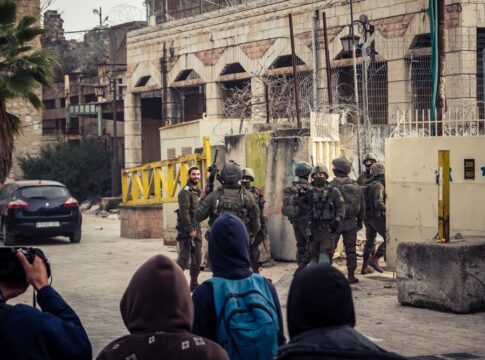
Israel’s sweeping closure of key West Bank town entrances in the name of “security” is deepening a long‑running system of control that crushes everyday life and raises serious red‑flag questions about basic freedoms.
Story Snapshot
- Israeli forces have sealed and gated many West Bank town entrances, claiming they are rooting out militants and protecting nearby Israeli settlers.
- United Nations and human rights reports say these closures block roads, isolate towns, and violate the basic right to free movement for Palestinian residents.
- Hundreds of new gates and barriers since the Gaza war now form a vast control network that can be closed at any time, turning villages into cages.
- International rulings affirm the West Bank as occupied territory, making broad, open‑ended “security” closures legally and morally suspect.
Military Closures Sold As ‘Security Reality’
Israeli military leaders say closing entrances to West Bank towns is about stopping terror attacks and keeping nearby Israeli settlers safe. After the Hamas assault on Israel in October 2023, the army ramped up its presence in the West Bank and pushed a message of “deterring terrorism” and “preemptive offensive activities.” Officials claim militants hide among civilians, so gates and checkpoints help them “monitor the situation” and catch threats before they strike. Supporters argue that, with rockets and shootings aimed at Israelis, tight control over roads is simply common‑sense defense.
Security officials also insist the closures are not meant to “hinder anyone,” but to root out militancy that could spill into Israeli cities and settlements. They portray the West Bank as a dangerous zone where militants use towns and refugee camps as cover. By sealing entrances, they say, troops can control who enters and exits, and respond faster to attacks. On paper this sounds like basic force protection. For American readers, it might recall how our troops set up roadblocks around bases in Iraq or Afghanistan.
How Gates And Checkpoints Strangle Daily Life
United Nations data and field reports show a harsher truth on the ground. Over 700 road obstacles, including gates, earth mounds, and manned checkpoints, now control Palestinian movement inside the West Bank. At least 306 gates were counted by the United Nations before the latest wave, and a Palestinian government body says that number has soared to over 900 barriers since October 7, 2023. These barriers sit at village entrances, on main roads, and between cities, allowing soldiers to cage entire communities by simply swinging metal gates shut.
When a town entrance is closed, residents can no longer drive to jobs, schools, hospitals, or markets without long detours, if they can move at all. Reports describe gates with erratic opening hours—sometimes they open for a short window, sometimes they stay locked for days. One widely shared video shows the town of Sinjil sealed off so that only a single guarded entrance remains for thousands of people. United Nations officials have warned that such closures are a major cause of poverty and block access to health care and education. In plain terms, these aren’t narrow, targeted roadblocks; they reshape whole civilian lives.
Occupation, Collective Punishment, And Rule Of Law
The International Court of Justice and most of the world recognize the West Bank as militarily occupied territory. Under international law, Israel must allow free movement for civilians there, and can restrict it only for narrow, “imperative” security reasons tied to clear, specific threats. United Nations fact sheets state bluntly that barrier sections and gate–permit regimes built inside the West Bank are unlawful and violate these obligations. Past reports from the United Nations Secretary‑General have warned that closing whole towns after attacks can amount to collective punishment.
Human rights researchers say that is exactly what is happening. The Palestinian Centre for Human Rights has documented Israeli forces using checkpoints and metal detector gates as tools of collective punishment and annexation, strangling the West Bank and turning it into isolated cantons. Amnesty International reports thousands of Palestinians killed, over 800 structures demolished, and communities pushed off their land while movement rules tighten. For many residents, every new gate looks less like a shield against terrorists and more like another link in a chain of permanent control.
Why Conservative Americans Should Pay Attention
American conservatives know that broad claims of “security” can be used to justify almost any kind of government overreach. When a military can close town entrances at will, with no clear timeline, due process, or individual suspicion, that clashes with core ideas we hold dear—limited government, property rights, and freedom of movement. United Nations reports describe these closures as central drivers of economic collapse in the West Bank, cutting off work, trade, and access to basic services. That should alarm anyone who believes government should not crush local economies or family life in the name of vague safety goals.
📹 “This is part of Israel's escalation policy, which began with the siege and blockade of Palestinian cities and various governorates.”
Israeli forces raided the headquarters of the al-Tadamon Charitable Society in Nablus, in the occupied West Bank, and ordered its closure… pic.twitter.com/OaF2x9Gml8
— Paddystinian (@Paddystinian) July 2, 2026
There is also a foreign‑policy angle for Trump‑era America. Our tax dollars, weapons, and diplomatic backing help shape what Israel does on the ground. If “security reality” becomes a cover for permanent occupation, mass displacement, and collective punishment, Washington will be tied to these policies in the eyes of the world. Supporting Israel’s right to defend itself does not mean signing a blank check for endless closures that trap civilians in walled‑off towns. As we push for strong borders and law and order at home, we can still insist on clear limits, real accountability, and respect for basic human rights abroad.
Sources:
youtube.com, npr.org, palestine-studies.org, facebook.com, ochaopt.org, state.gov, english.palinfo.com, btselem.org, amnesty.org, acleddata.com